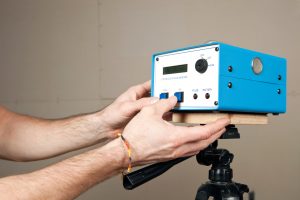

At Callaway & Associates, we have been helping homeowners, businesses, schools, daycares, and property managers understand and address radon concerns for more than 30 years through professional radon measurement services.
Most homeowners have heard of radon, but many do not fully understand what it is or why testing for it is so important. Unlike many household hazards, radon cannot be seen, smelled, or tasted. It exists completely unnoticed, which is one of the reasons it can pose such a serious risk.
Because radon exposure occurs silently over time, many homes and buildings may have elevated levels without occupants ever realizing it. The only way to know whether radon is present is through professional testing.
TL;DR: Why Is Radon Dangerous?
- Radon is a naturally occurring radioactive gas.
- It cannot be seen, smelled, or tasted.
- Radon can enter homes through foundations and other openings.
- Long-term exposure can create serious health risks.
- Elevated radon levels can be found in both old and new homes.
- Testing is the only way to know if radon is present.
- Professional radon testing provides accurate results and peace of mind.
What Is Radon?
Radon is a naturally occurring radioactive gas that forms when uranium breaks down in soil, rock, and groundwater.
As the gas is released from the ground, it can move upward and enter buildings through cracks in foundations, gaps around pipes, crawl spaces, sump pits, and other openings. Once inside, radon can become trapped and accumulate to elevated levels.
Because radon is invisible and odorless, most people have no way of knowing it is present without testing.
Why Is Radon Considered Dangerous?
The primary concern with radon is long-term exposure.
When radon gas is inhaled, radioactive particles can become trapped inside the lungs. Over time, this exposure can damage lung tissue and increase health risks.
The danger is not usually associated with short-term exposure. Instead, it develops gradually over many years of breathing elevated radon levels within a home, workplace, or other building.
Can Radon Be Found in Any Home?
Many people assume that only older homes have radon problems, but elevated radon levels can be found in homes of all ages, sizes, and construction types. New homes, existing homes, homes with basements, homes without basements, and even commercial buildings can all experience radon accumulation.
The presence of radon depends on local geology, soil conditions, construction characteristics, and ventilation patterns.
Is Radon Common in Illinois?
Because radon originates naturally from the ground, levels can vary significantly from one property to another, even between neighboring homes. A home with low radon levels may sit next to a home with elevated levels.
This is why testing each property individually is important.
How Do You Know If Your Home Has Radon?
Testing is the only reliable way to determine whether radon is present.
Since radon has no visible signs or symptoms inside a building, homeowners cannot identify it through appearance, smell, or routine inspections. Professional radon testing provides accurate measurements that help determine whether radon levels fall within acceptable ranges.
Without testing, there is simply no way to know.
What Types of Buildings Should Be Tested for Radon?
Many different types of buildings can benefit from radon testing.
In addition to single-family homes, testing is often recommended for:
- Multi-family housing
- Commercial properties
- Schools
- Daycare facilities
- Manufactured homes
- Real estate transactions
Any building where people spend significant amounts of time can potentially develop elevated radon levels.
Protect Your Property With Professional Radon Testing
Because radon cannot be seen or smelled, professional testing is the only way to know whether your home or building has elevated levels. Early detection provides valuable information and helps property owners make informed decisions about their indoor environment.
For more than 30 years, Callaway & Associates has provided professional radon testing services throughout East Central Illinois. Our team performs testing for residential, commercial, multi-family, educational, and manufactured housing properties while delivering accurate reporting and dependable service.
Contact Callaway & Associates today to schedule a professional radon test.
Radon Testing FAQs
No. Radon is completely odorless, colorless, and tasteless, making testing the only reliable method of detection.
Yes. Elevated radon levels can occur in both new and older homes regardless of construction age.
Testing time varies depending on the testing method used, but professional measurements are designed to provide accurate and reliable results.
Many homebuyers choose to include radon testing during the home-buying process so they can better understand the property's indoor environmental conditions.
Testing schedules can vary, but many experts recommend periodic testing, particularly after renovations, structural changes, or significant changes to the home's ventilation system.